


Ahsoka's Set Creation Process (Long-Form)
Article
VP Producer at Narwhal Studios
Source
Felix Jorge
Date
2024
A breakdown of how the virtual art department built the in-camera VFX environments for Lucasfilm's Ahsoka, building on techniques from The Mandalorian Season 1.
I produced the VAD at Narwhal Studios. I built the pipeline, hired the team that art directed and built the sets, and fielded weekly calls with the producers and production designer Andrew Jones.
We reused the Unreal Engine asset library from The Mandalorian and Obi-Wan Kenobi to speed up set decoration. We worked with the art department to design, light and refine each set, then delivered final pixel scenes to the Unreal stage, ILM's Helios and traditional VFX.
At a glance
Schedule
Concept art and design: 8 weeks
VAD construction: 9 months
Volume integration and testing: 4 months
Resources
Real-time VAD artists: 14
Engineers: 3
Deliverables
Hero location sets with multiple variants: 17
Set variants: 65+
Set dressing assets, photogrammetry: 30+
Lighting scenarios: 85+
VScout storyboard frames: 300+
Partner reviews
Virtual stage walks with the production designer: 190+
Prelight and camera blocking sessions with the DP: 65+
Hosted creative reviews (VScouts): 42+
The ask: film quality at previs speed
The goal was Unreal Engine sets as close to the final image as possible, a shift away from a workflow that leaned on post-production to finish the job. That was the big push on this show, and the one the producers kept pressing us on: VFX film quality at the speed of previs.

To get there we restructured the team. I hired more senior artists, especially stronger lighters, and trained VFX asset artist and lighters on real-time workflows, with weekly classes and coaching. Regular communication with production and virtual location scouting let the VAD focus the work where the camera was looking.
Running four sets at once
To handle several environments in parallel, we formed pods with an art director, team lead, set owners, and VAD and photogrammetry artists, running up to four sets at a time. I onboarded every new artist straight into a pod so they learned the pipeline with a team.
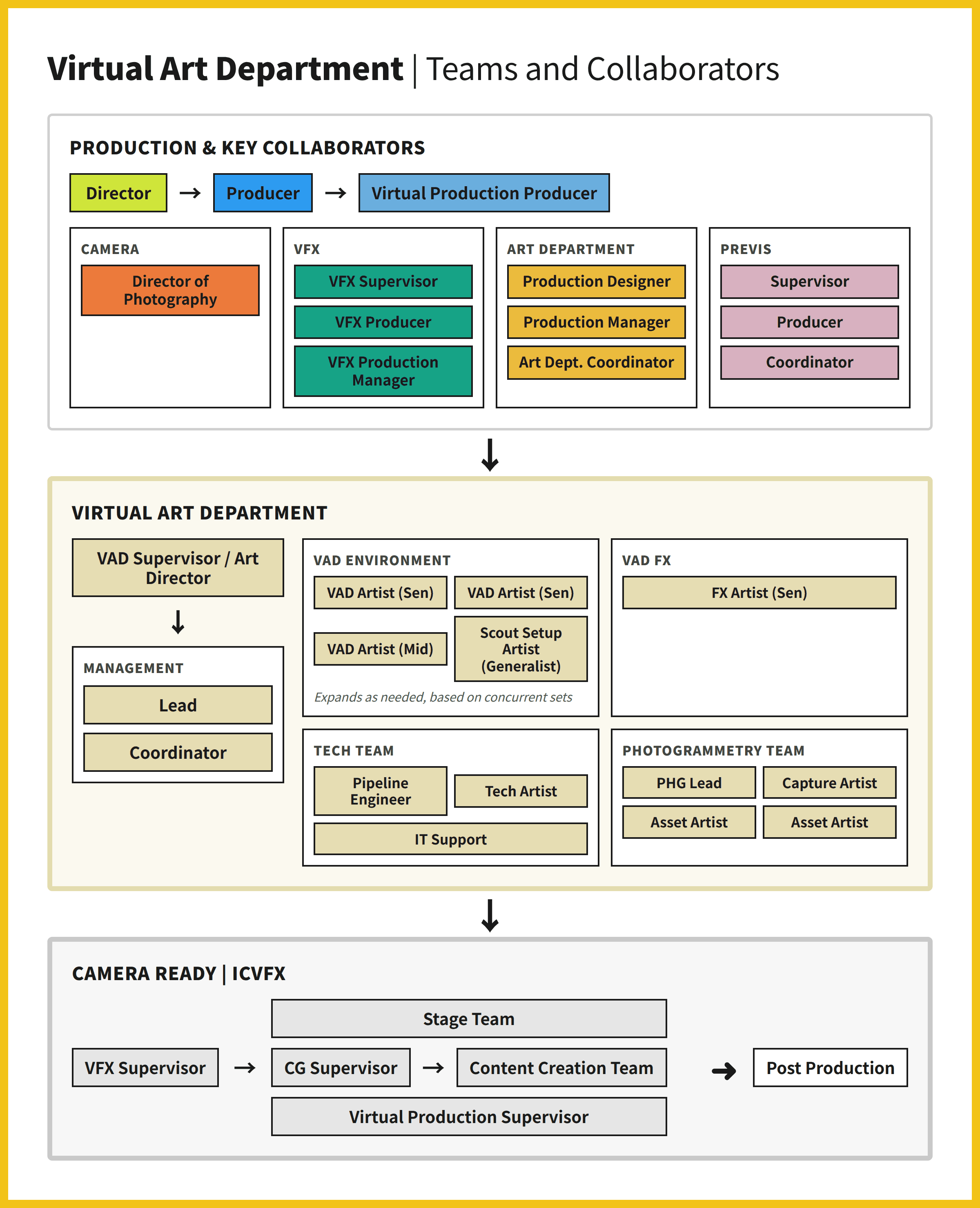
Set owners worked with generalist VAD artists to finalize designs, guided by the VAD Art Director and Lead, who prioritized based on feedback from the VP Producer and Production Designer, mostly by reviewing still frames from the weekly virtual location scouts.

Initially, schedules and budgets were created in spreadsheets, but eventually they were managed inside of Shotgrid. A Shotgrid heavily customized for the virtual art department workflow so it could absorb daily sprint plans and constant change. Updates went out through Shotgrid and Mattermost, a secure server-hosted chat platform that kept everything off the internet, basically a slack that doesn’t leave the server.
From blockout to final pixel
It started with meetings between the production designer and VAD Art Director to review reference and concept art. We pulled set designers' 3D models, VFX assets, and purchased asset libraries into a unified Perforce database, with server permissions set per department to the show's security requirements.
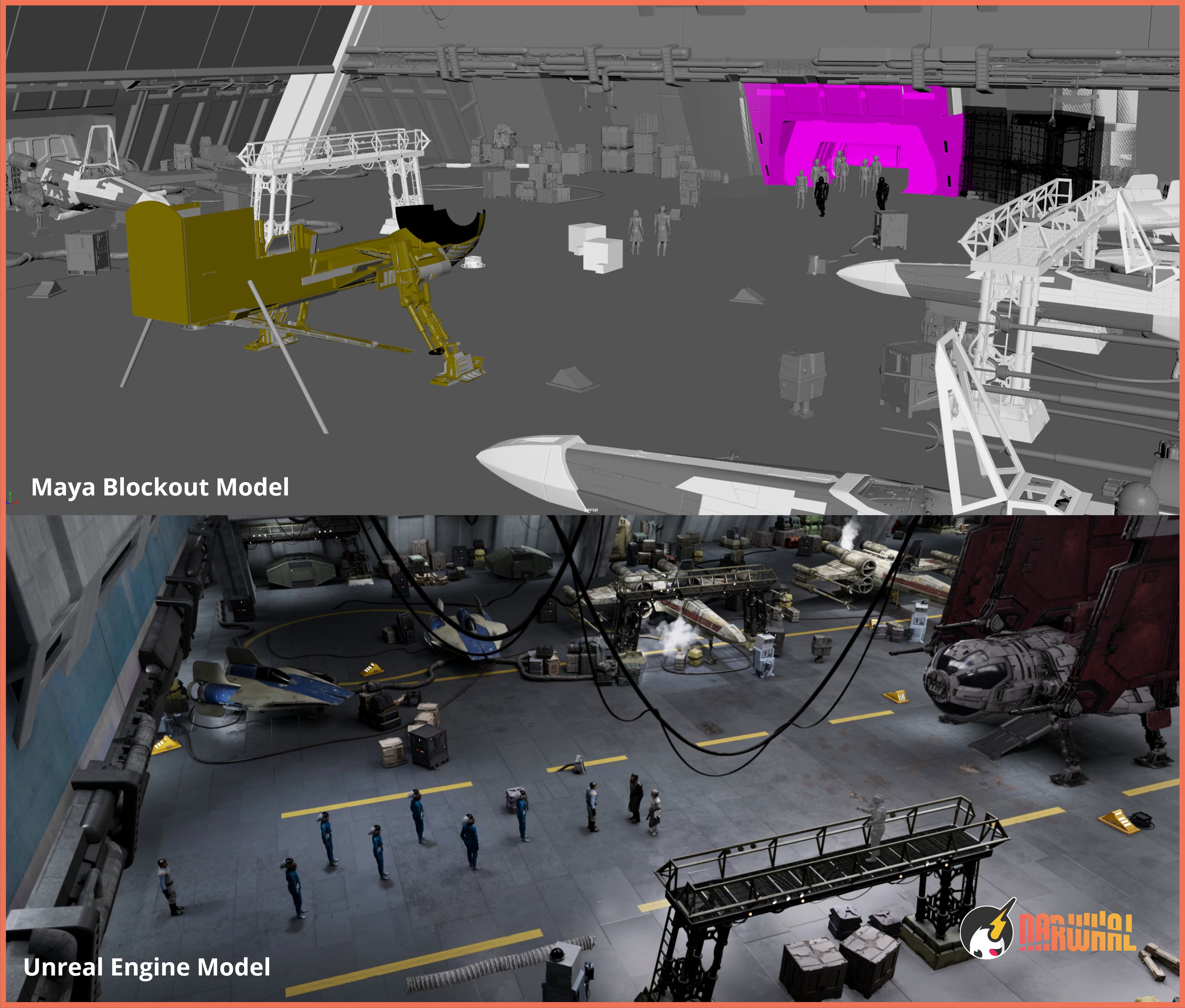
Those first block-outs, simple shapes, laid the groundwork for everything that followed. Every set then moved through the same stages to keep creatives on schedule: block-out, previs, look-development, final.
The final version is vetted, tested on stage and optimized, then handed off as an Unreal Engine file per scene carrying multiple lighting scenarios. The stage teams save them ready for the shoot and any last-minute tweaks.
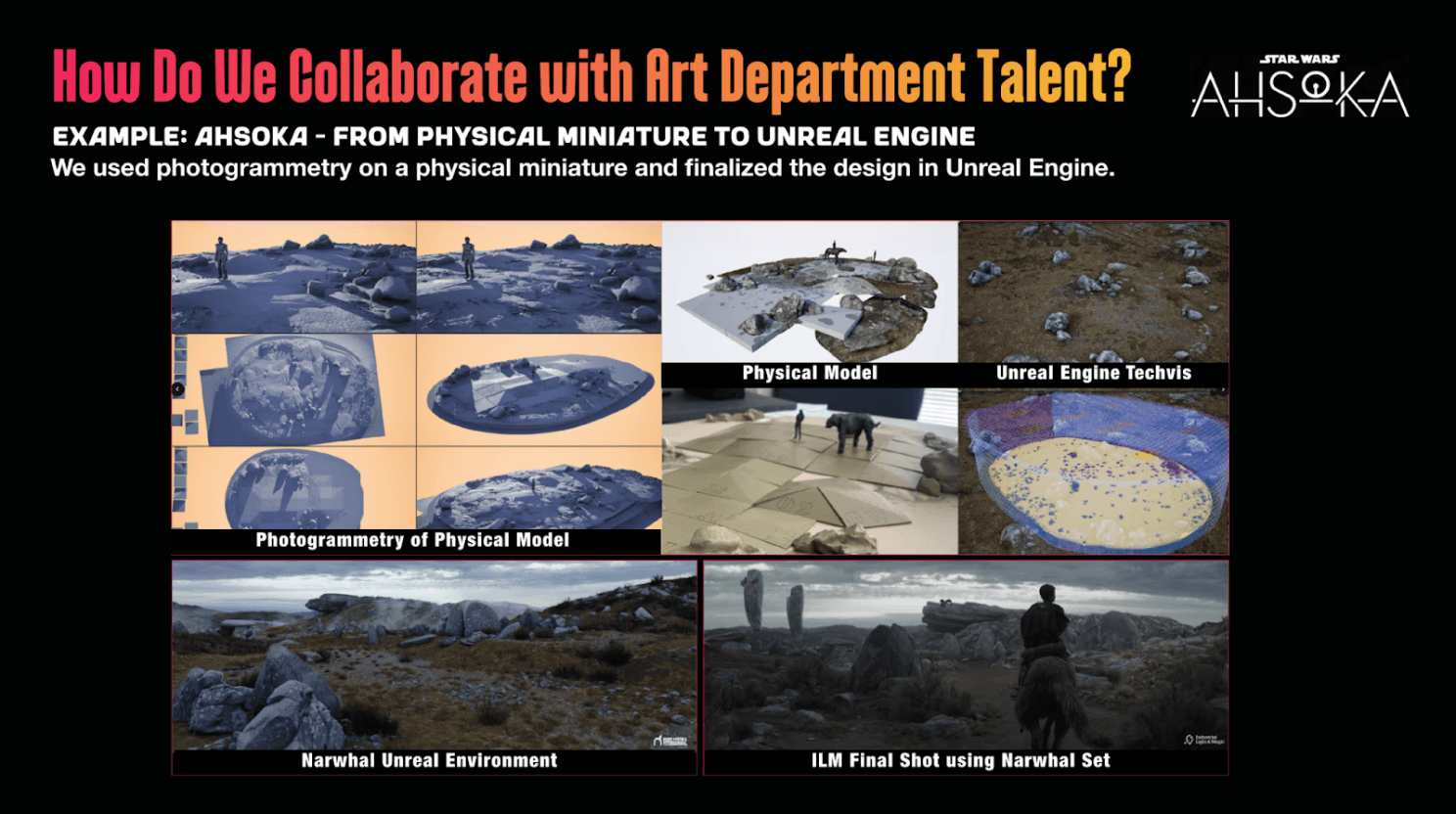
Photogrammetry of life-size props, miniatures and set decoration let the production designer and set decorator drive the look and marry the physical and virtual props. Scanned assets go through cleanup, textures get flattened, and low, medium and high versions are built. When we scanned a miniature we worked with the model makers to scale it into a life-size set and used it as the foundation for the block-out. The Seatos henge below is one of those. Seven of the 17 hero locations used photogrammetry captured with the art department.

Virtual location scouts
On The Mandalorian Season 1 we used virtual location scouts in-house. For Ahsoka we introduced remotely driven, virtual scouts, allowing people to hop in a VR from home, and scout a location.
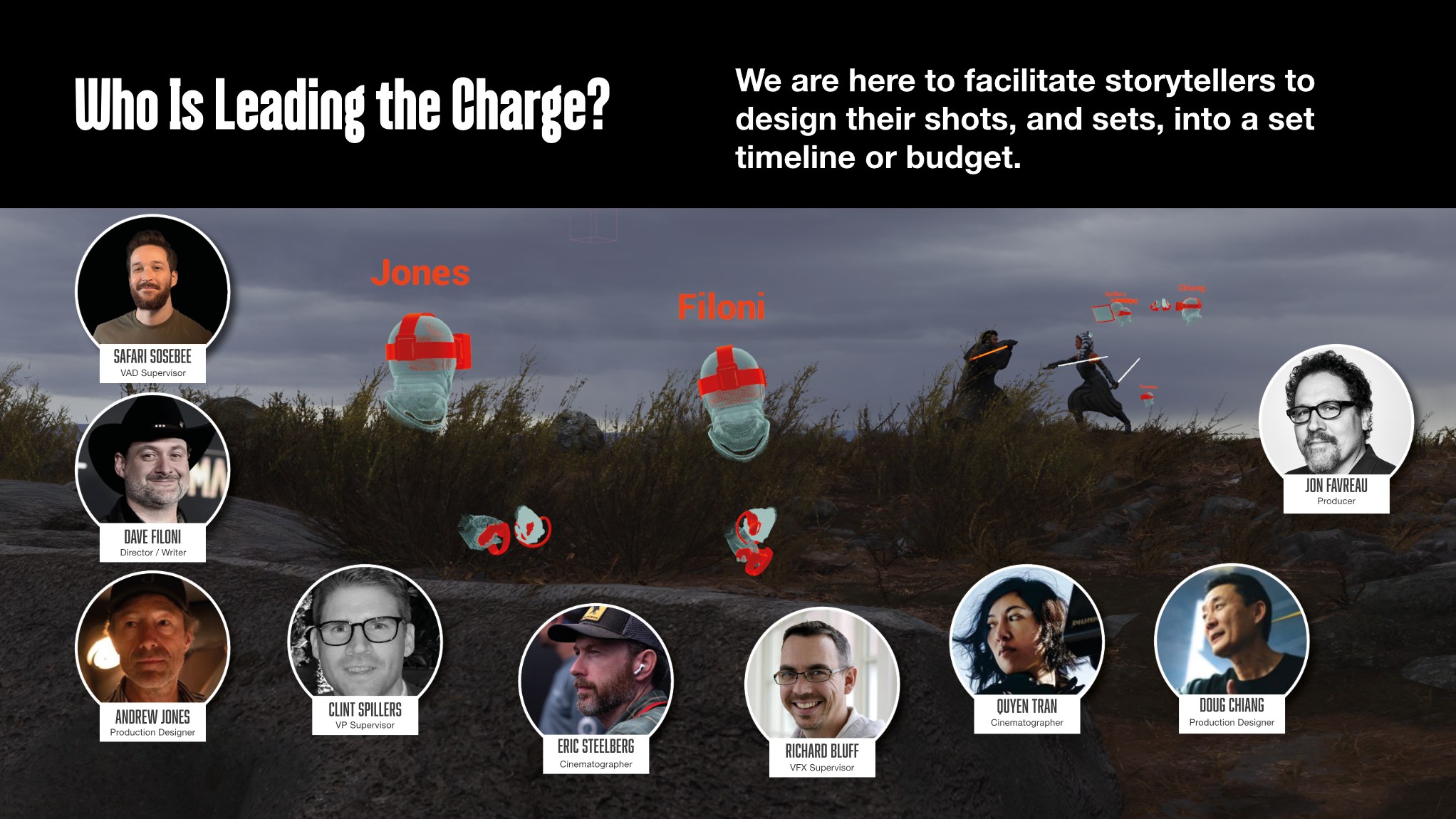
We hosted regular sessions with directors, production designers, DPs, storyboard artists, previs, writers and producers to review locations out of Unreal Engine, place cameras and capture still frames. Those frames guided focus across previs, VAD, VFX and physical construction.
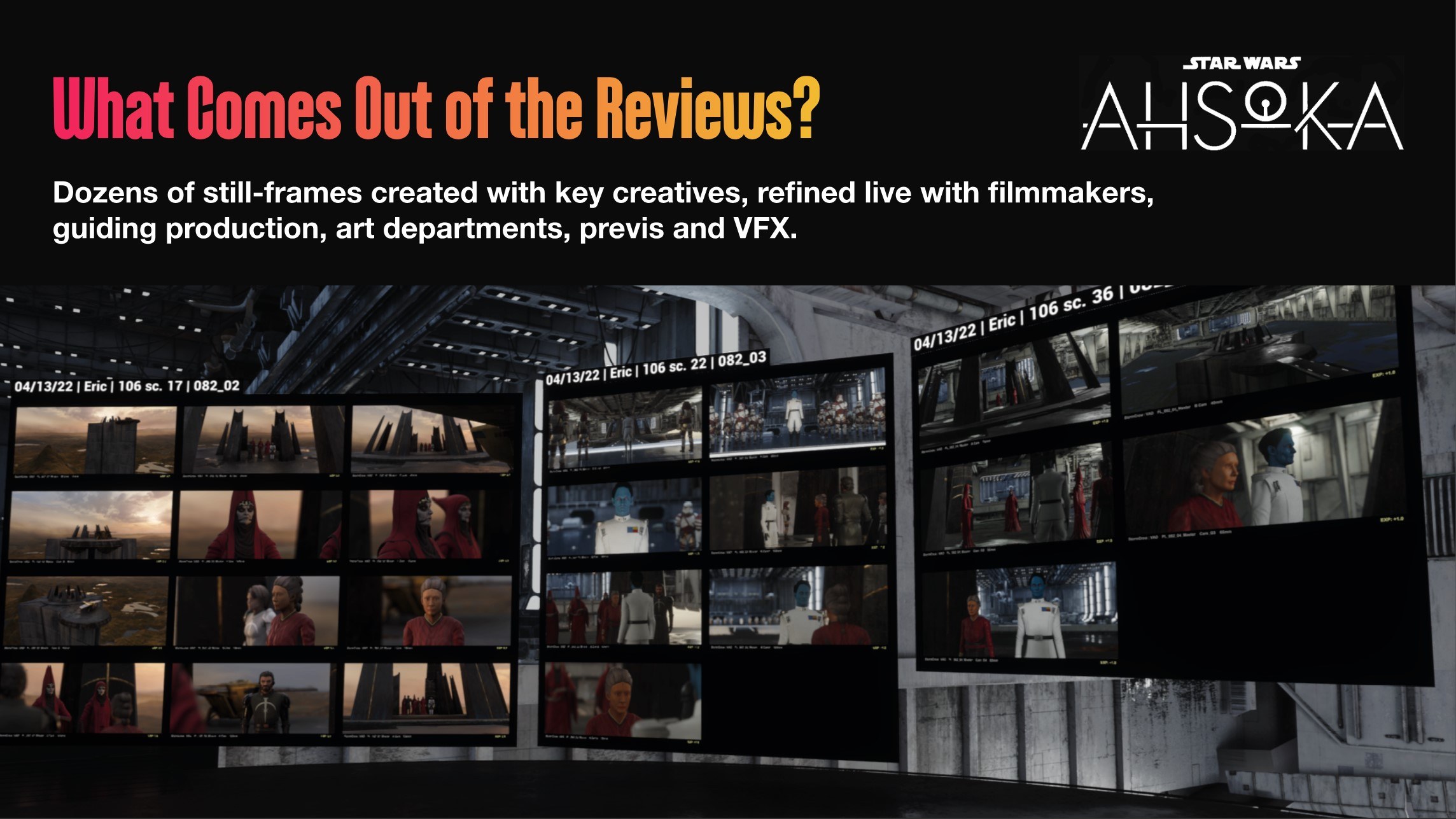
Sessions ran 1 to 2.5 hours and produced 30 to 80 usable frames, shared with key production members immediately. We also gave creatives remote access to explore the environments from home whenever they wanted, so creatives could jump into a virtual location whenever they’d like.
Ahsoka key creative team
Andrew Jones - Production Designer
Doug Chiang - Production Designer
Jon Favreau - Creator / Executive Producer / Writer
Dave Filoni - Creator / Executive Producer / Director / Writer
Eric Steelberg - Director of Photography
Q Tran - Director of Photography
Rachel - Art Director
Clint Spillers - VP Producer
Lighting: hitting the final look
Lighting is the vital component of in-camera VFX, it was refined continuously across the project.
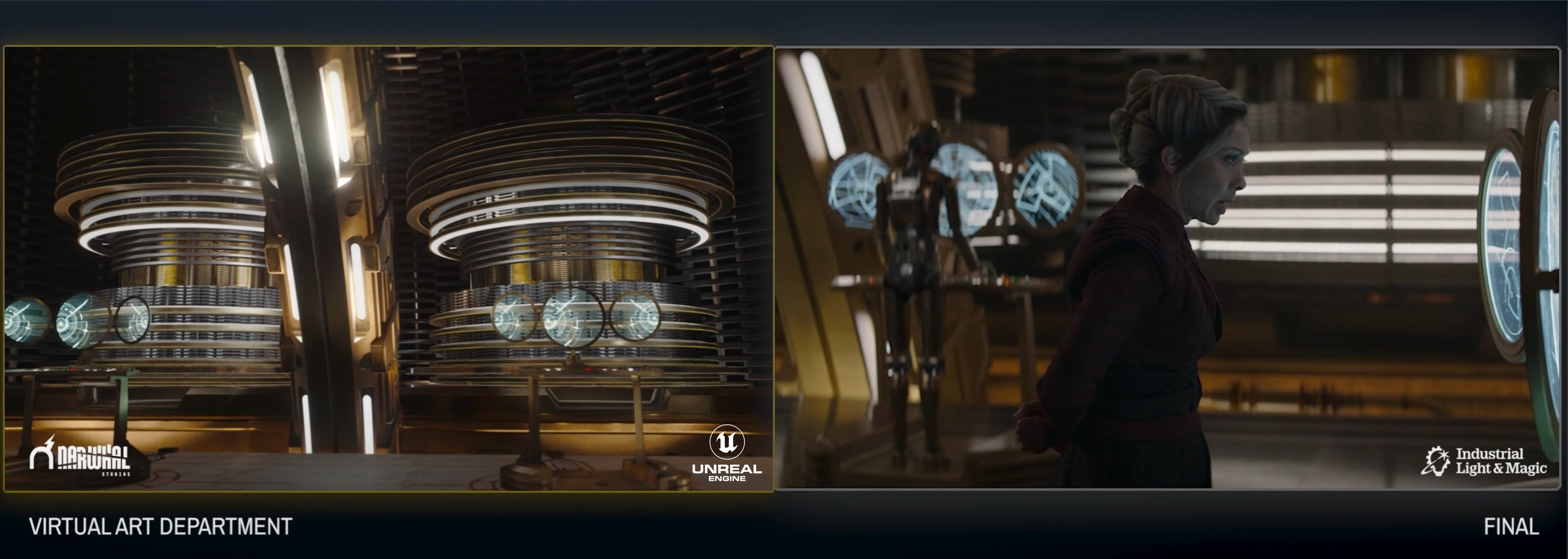
Each week the lighters worked with directors of photography Eric Steelberg and Q Tran to establish base lighting, building multiple scenarios tuned for the virtual location scouts. Through trial and error with the physical construction, set decoration, stage and VFX teams, we kept adjusting until the key creatives were satisfied.
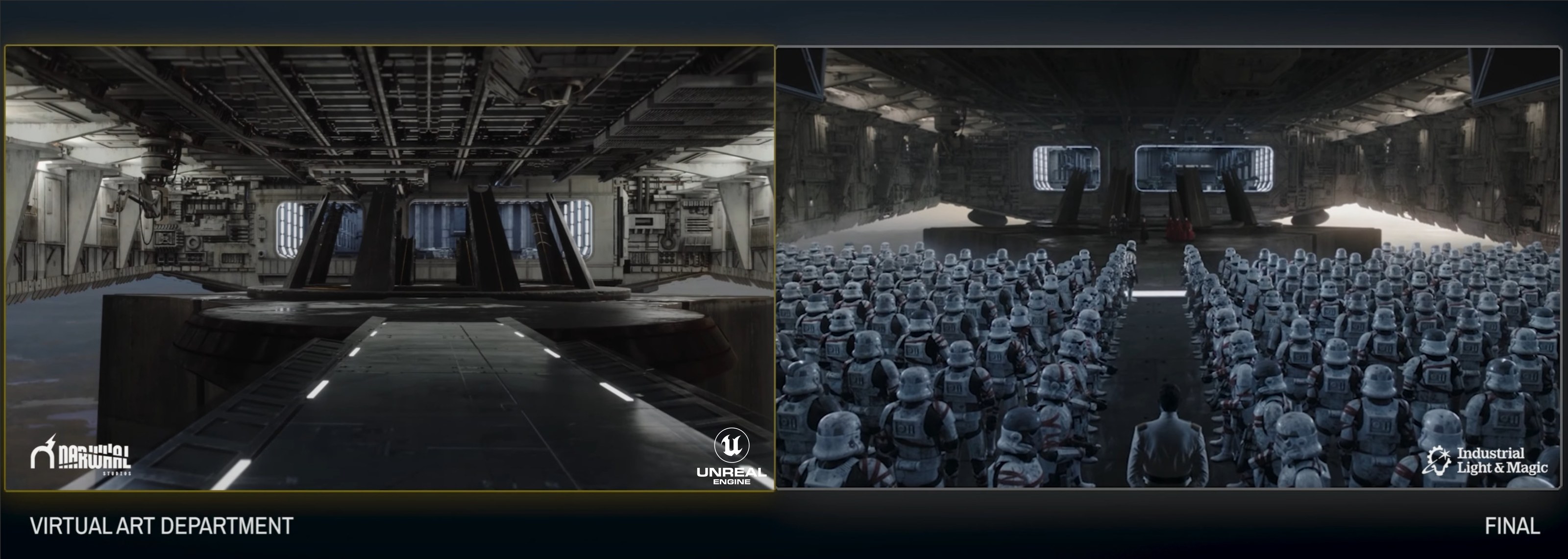
Lighting process: Understand the action and mood and gather reference first. Light the major shapes in broad strokes to establish key angles and camera placements. Then sculpt light toward the areas of interest, adjusting color and intensity as textures and materials come in. Fine-tune light placement and camera settings last.
Once the lighting was approved through the lens on stage, we ran stage tests, took the feedback, and handed it to the stage team.
Turnover: art department techvis
Turnover documents were a major part of planning the shoot: techvis developed in close collaboration with the art department, stage and VFX teams. For the Peridea Henge volume set, different lighting scenarios and volume placements covered different scenes.

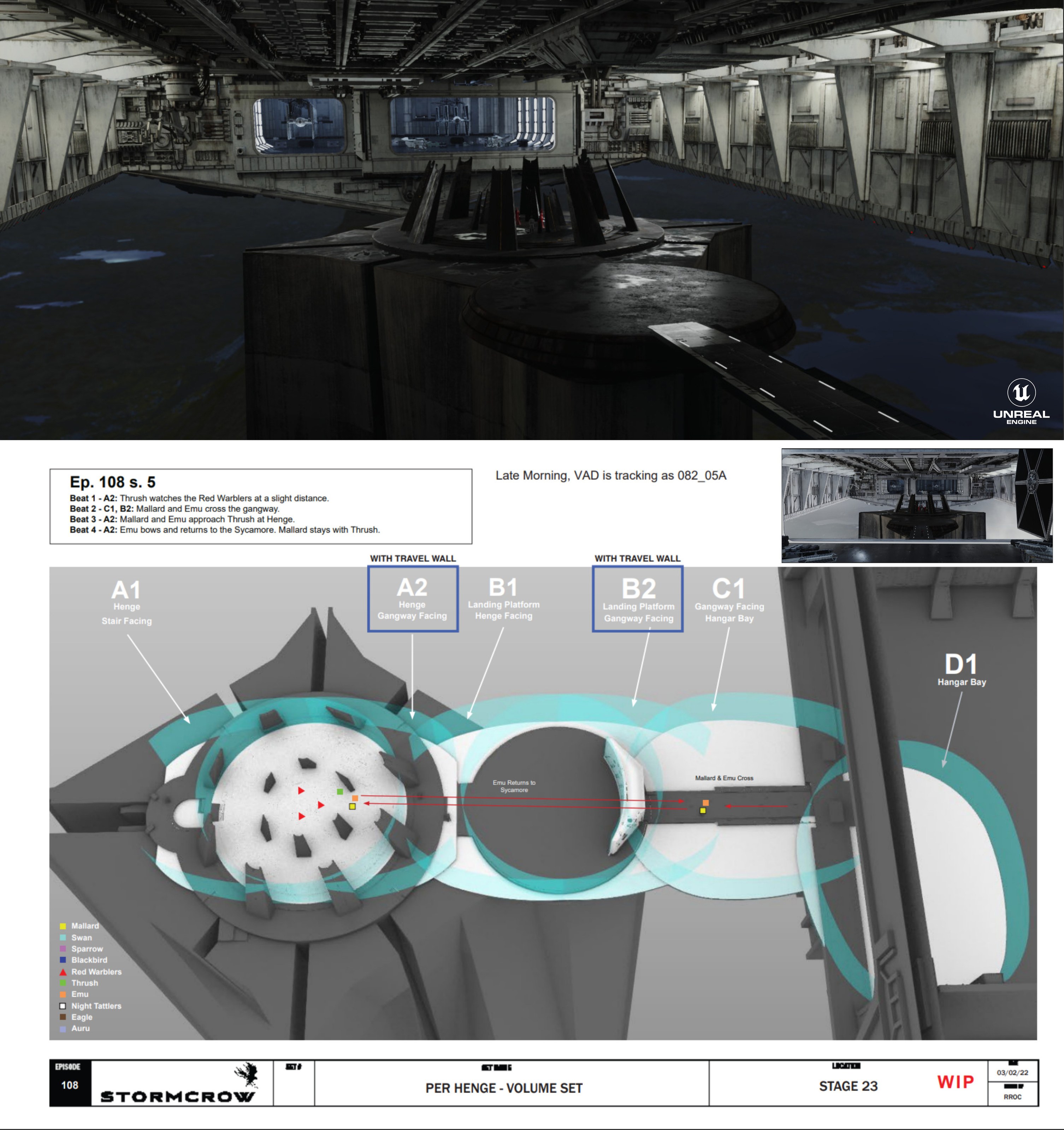

Each variant, night, late morning, late afternoon, needs its own set decoration and lighting adjustments, planned and coordinated before filming. The location of each volume in the Unreal Engine scene, labeled A1, A2, B1, B2 and so on, dictates what the screens display. Some lighting scenarios and set decorations carry across scenes, others change to match the story beats.
We ran regular LED-stage tests with the DP and other key creatives to confirm the sets read as real, then refined on that feedback and passed off to the stage team.
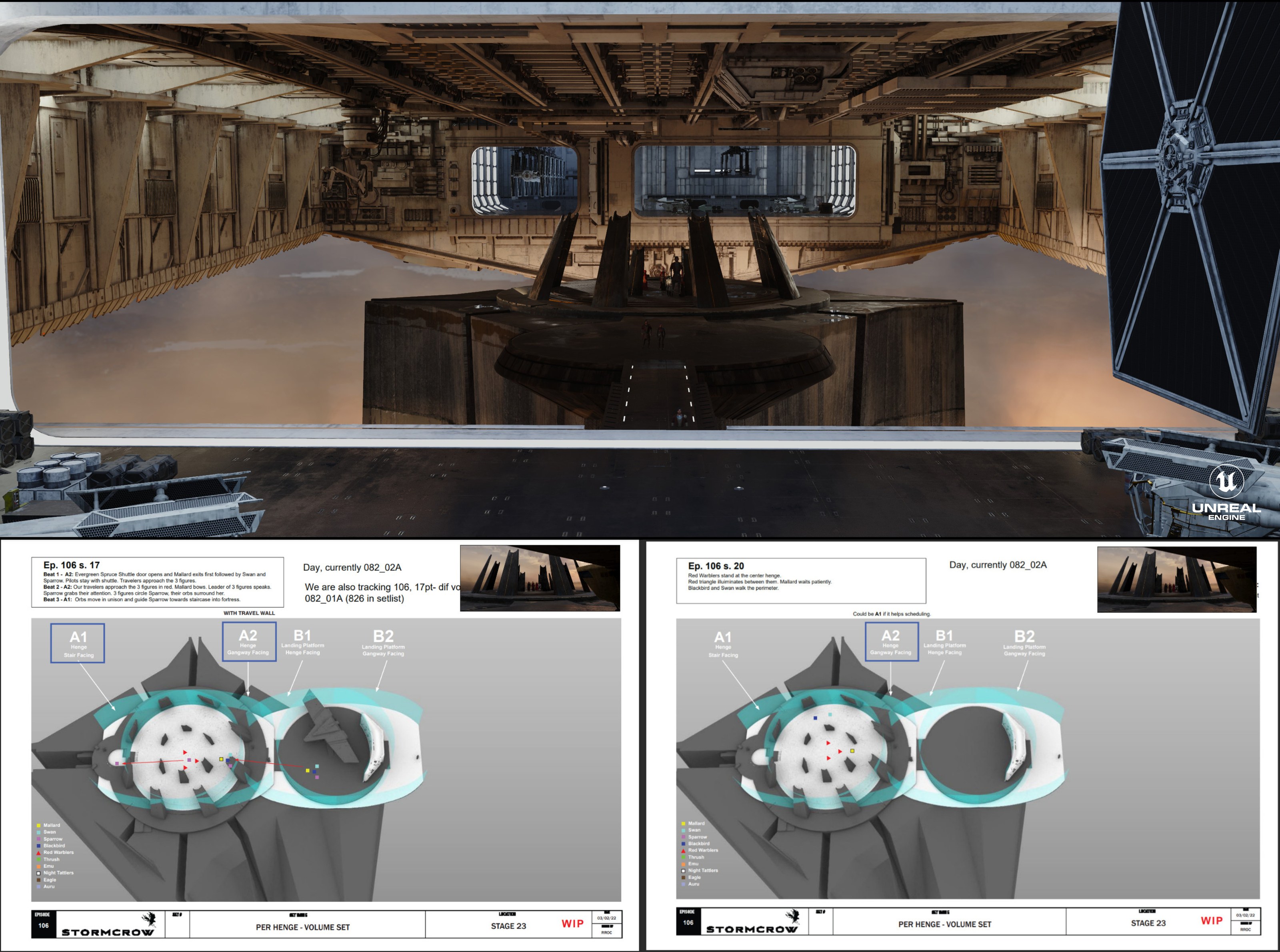

Turnover included detailed documentation: techvis, volume placements, virtual scout cameras, set decoration, reference and concept art. It mirrors what physical construction teams do in the art department, adapted to the virtual side.
Set challenges
Every environment needed its own strategy to hit the fidelity bar and still capture the story beats.
The shipyard

One of the most ambitious sets, because of the moving sequence through a long corridor. We started with simple geometric block-outs, then added submarine factory models for depth. Scale was the hard part, so we tested everything from a single ship to dozens of parts, with constant feedback from Andrew Jones and Eric Steelberg until it felt balanced.
Eye of Sion
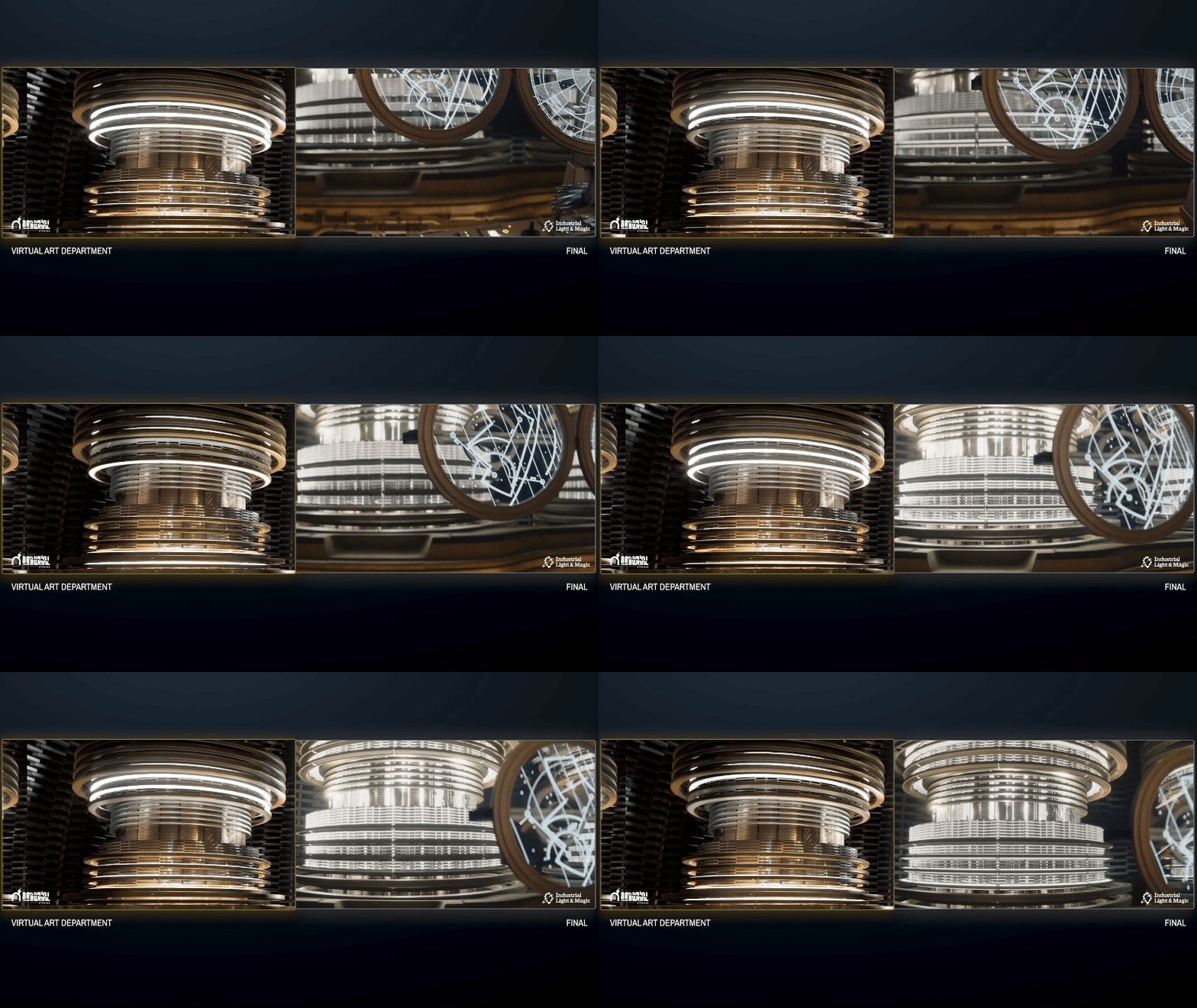
The script called for an animated pulsing effect when the generators activated, with no visual concept attached. The team presented multiple options and, after several rounds of feedback, landed the design. The animated lights are in the final shot, behind the actress.
Peridea Henge
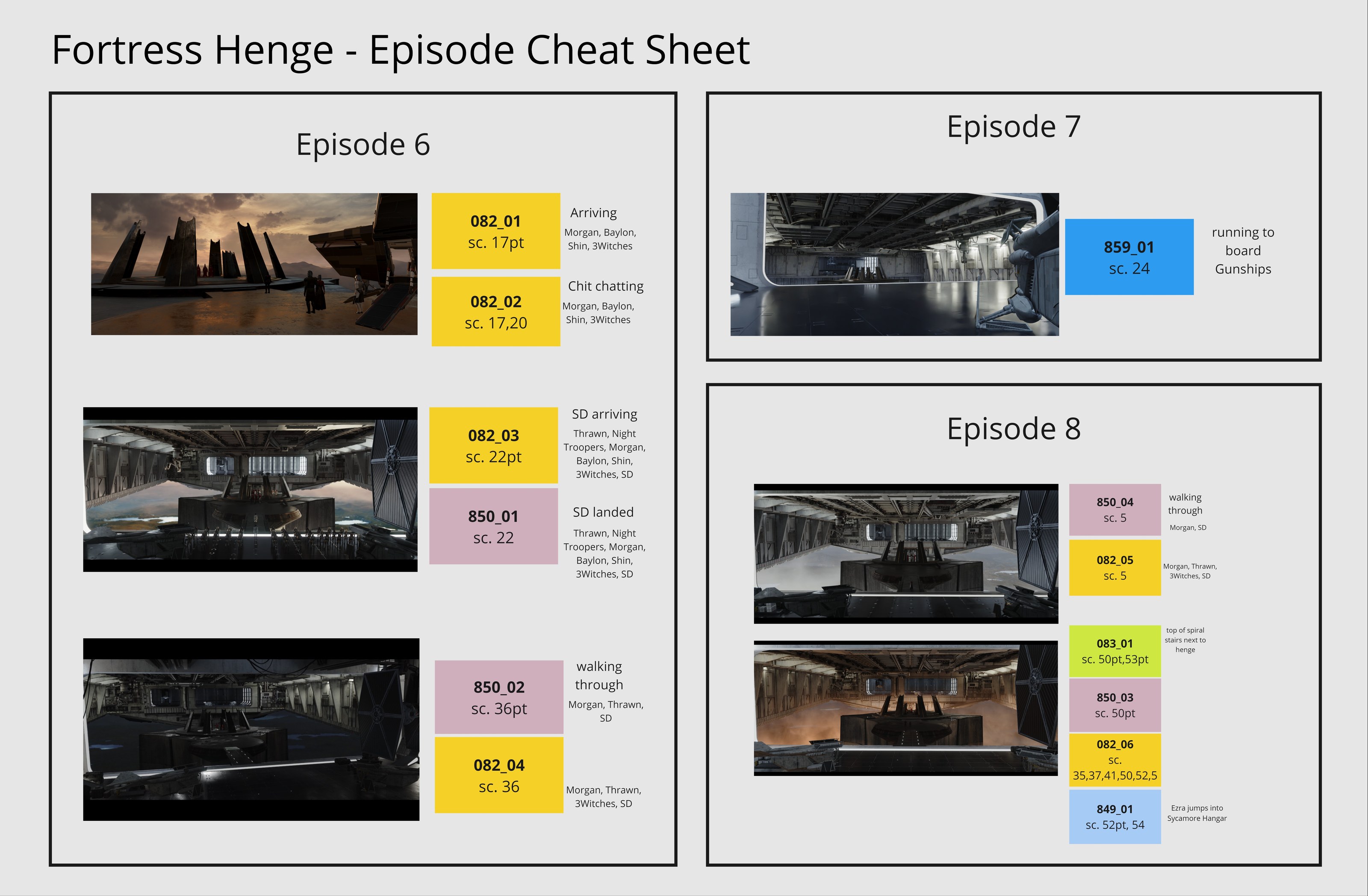
Over six lighting variants, each tuned to a different scene as characters moved through the space. We matched the variants to set decoration change-overs and delivered five lighting setups usable on the day of principal photography, so the stage could adjust during filming.
Noti reveal
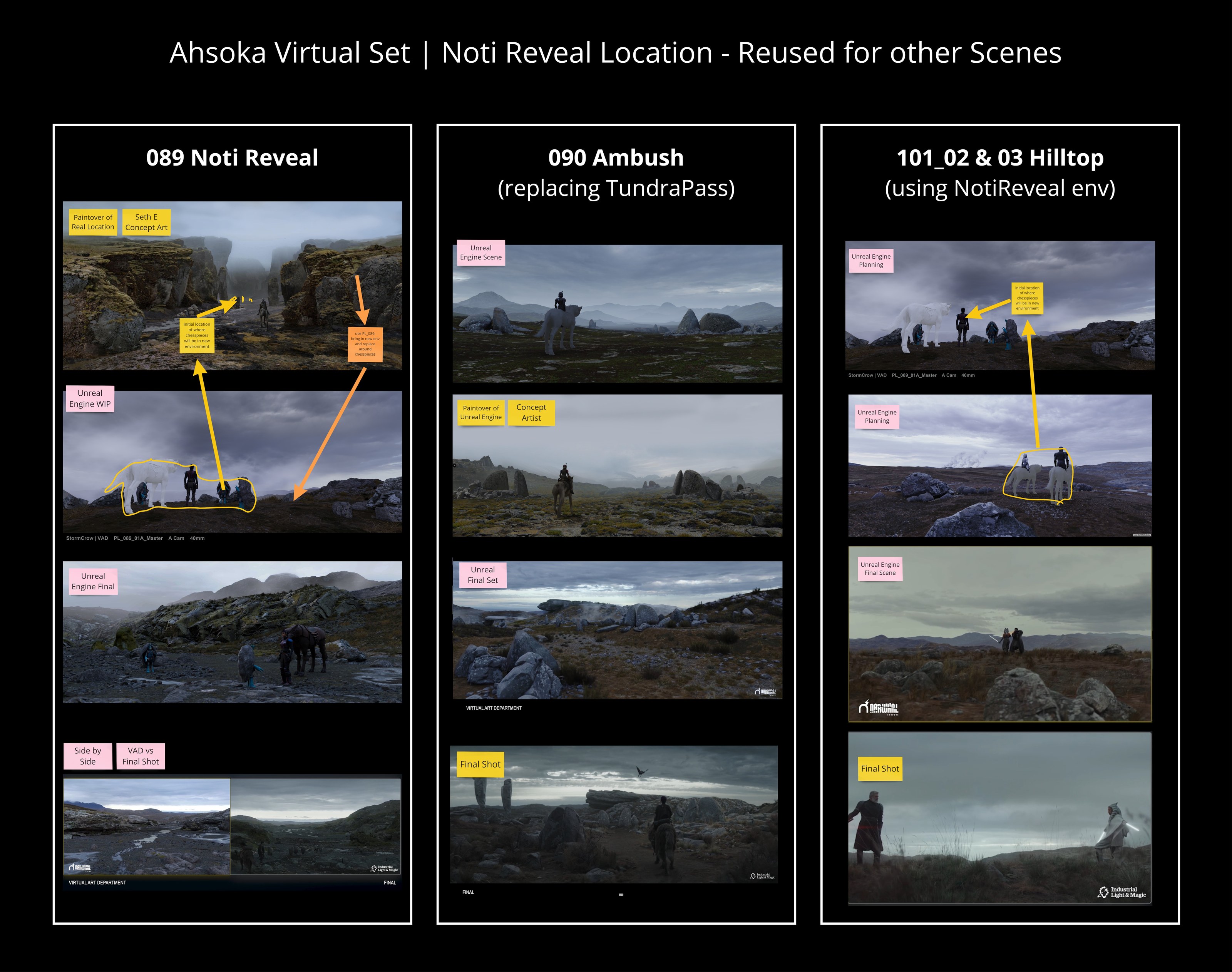
It began as a simple misty landscape and, as the story evolved, needed a new look. With a few weeks left before turnover the team re-designed the set for more visual impact and a closer fit to the script. A good example of the kind of last-minute changes that might come up, even after everything's been approved.
Thanks for reading.